Monday, November 16, 2015

So that No One Might Have Too Much

Sermon for November 14, 2015
Mark 10:17-3117As he was setting out on a journey, a man ran up and knelt before him, and asked him, “Good Teacher, what must I do to inherit eternal life?”18Jesus said to him, “Why do you call me good? No one is good but God alone. 19You know the commandments: ‘You shall not murder; You shall not commit adultery; You shall not steal; You shall not bear false witness; You shall not defraud; Honor your father and mother.’” 20He said to him, “Teacher, I have kept all these since my youth.” 21Jesus, looking at him, loved him and said, “You lack one thing; go, sell what you own, and give the money to the poor, and you will have treasure in heaven; then come, follow me.” 22When he heard this, he was shocked and went away grieving, for he had many possessions.
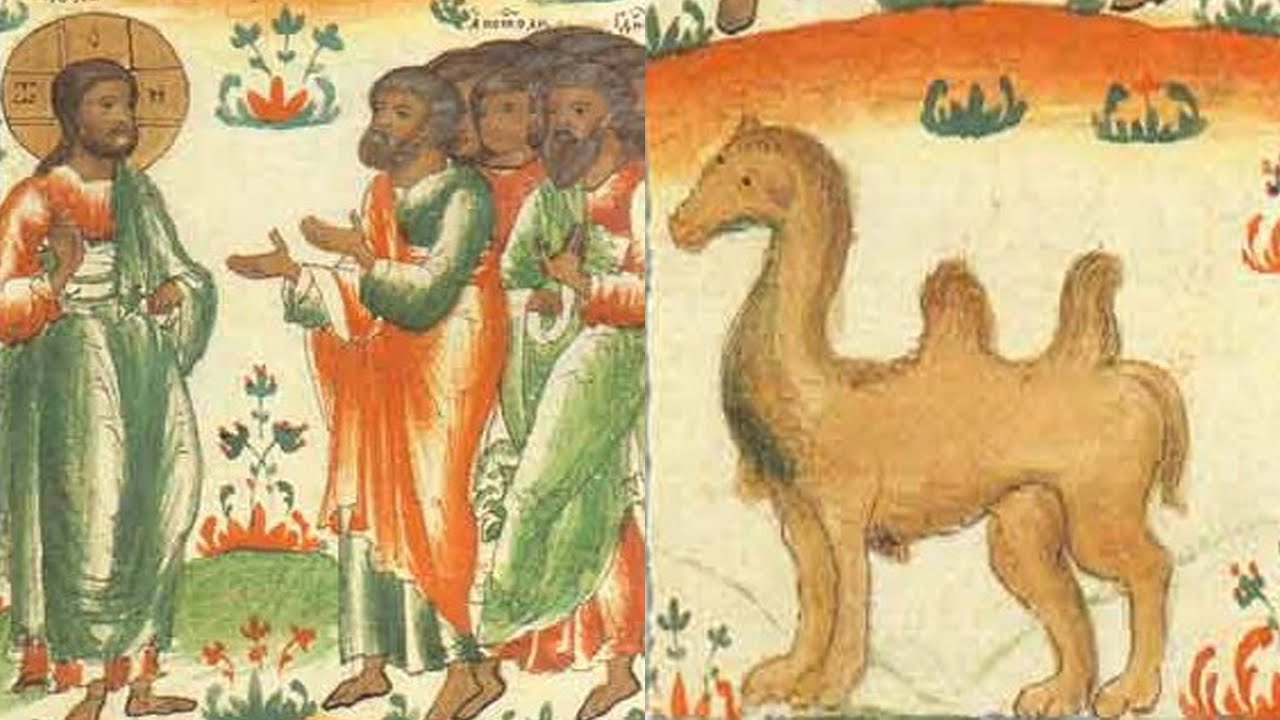
23Then Jesus looked around and said to his disciples, “How hard it will be for those who have wealth to enter the kingdom of God!” 24And the disciples were perplexed at these words. But Jesus said to them again, “Children, how hard it is to enter the kingdom of God! 25It is easier for a camel to go through the eye of a needle than for someone who is rich to enter the kingdom of God.” 26They were greatly astounded and said to one another, “Then who can be saved?” 27Jesus looked at them and said, “For mortals it is impossible, but not for God; for God all things are possible.”
28Peter began to say to him, “Look, we have left everything and followed you.” 29Jesus said, “Truly I tell you, there is no one who has left house or brothers or sisters or mother or father or children or fields, for my sake and for the sake of the good news, 30who will not receive a hundredfold now in this age—houses, brothers and sisters, mothers and children, and fields with persecutions—and in the age to come eternal life. 31But many who are first will be last, and the last will be first.”

This isn't me but my bags looked a lot like this
When I was 18, I volunteered to serve for the summer in Brazil. As I packed my bags, I had no idea what to expect, so I tried to anticipate what I might need. I put everything on the bed, removed half, and then stuffed the remaining half into a backpack and duffel bag. At the end of the summer, as I repacked my bags for the trip home, I remember taking my duffel bag out, realizing I had used less than half of what I had brought and how I really didn’t need most of the things I had brought. I tried to remember my things at home but I had a hard time visualizing my possessions. I left a lot of things with my host family and traveled home with a much lighter bag and a radically different relationship with stuff.
A simple hammock like this and about 3 outfits were all that I really needed. Oh, and a toothbrush. 
Before that summer in Brazil, I had never seen myself as rich. My mom was a single parent of 4 girls and a teacher in a small town. In my private high school, which I attended with scholarships, I had some classmates who lived in houses with marble floors and received brand new Range Rovers for their birthday. If you had asked me before Brazil if I were rich, I would have said no. But ever since that summer, I know that the story of the Young Rich Man has something for me to learn, too. Because even if I don’t drive an expensive car or live in a mansion, I have more wealth than many, and how I use or do not use that wealth is part of my faith life.

One of the places Jesus speaks most clearly to those with wealth is the story we heard today- the story of the young rich man. He’s a good and righteous guy, but he lacks one thing: treasure in heaven, which he can get, not by selling and trading, but by selling his possessions, giving to the poor, and then following Jesus.  And the guy goes away “shocked and grieving”, for he had many possessions. He realizes that he can’t do it. He can’t give up his stuff, he can’t go follow Jesus. He misses the opportunity of a lifetime because he can’t give up his wealth. The young rich man had too much stuff, and it kept him from following Jesus.

I wish I could say that this story doesn’t apply to me because there are other people who are richer. But through this story, I hear asking me hard questions, too. Am I living generously and trusting God? If not, why not?

For me, it’s fear that holds me back, fear that I won’t have enough, fear of scarcity. What if my spouse lost employment, what if there were an accident and a ton of medical bills, what if, what if, what if? Most of the “what ifs” aren’t probable. I suppose they’re possible, but they probably won’t happen. Fear isn’t logical but it is powerful, and my fear keeps me from fully trusting God. It changes my money from a tool into a security blanket- and security blankets are hard to let go.

Regardless of the amount, anytime money becomes something other than a tool- whether it’s a security blanket or a symbol of power or status or a way to gain acceptance, it changes from something that can be used into something that we want to hold onto.  It can become more important to hold onto it than to use it to serve God or our neighbor. But this is how I understand the scriptures and God’s call on our lives: God calls us to follow, to love God and neighbor more than we love our money or our possessions.
So what to do when we realize that, like the rich young man, we are unable to let go? What do we do when we know we have fallen short?

We trust in the grace and mercy of the God who loves us no matter what. We rely on God’s love, which is unceasing and does not depend on how much or how little we give. This story doesn’t just show us the rich man who fails, it tells us that Jesus looked at the young man and loved him- even as he saw his imperfections. Jesus loves us, too, so we can put ourselves right into God’s hands, asking that God free us from fear and teach us to live with trust.

Image result for break chainsI want for us all to find deep joy in following Jesus, living generously, and growing in faith and trust. So even if we’re not there yet, we can practice and we can learn to trust God more. I believe that when we give, we are chipping away at bonds that chain us to our fears of not having enough, to our expectations about what we or others are worth, and to our need to have control of tomorrow.

Jesus is our freedom, and when we give, we take one step of leaving behind our stuff and one step toward Jesus, who calls us to come with him on adventures of a lifetime.

Following Jesus will take us on priceless adventures, and for me, there is no amount of money or any possession that would make up for missing traveling with Jesus. In the long run, possessions and wealth are of less importance to me- stuff is just stuff.  That rich young man’s wealth is gone. All our possessions will be gone. We’ll be buried on the hill, our bones turned to dust and ashes. We can live life as if we have nothing to lose, because in the long run, we’re going to lose everything except our life in God. So we can let go of all those things which surely perish and participate in making God’s kingdom here on earth- where all have enough and no one has too much. Amen.


Wednesday, September 16, 2015

Jesus' pop quiz

Pentecost 16B, September 13, 2015
Jesus, Peter, painting, "Get Behind Me Satan"Mark 8:27-38 27Jesus went on with his disciples to the villages of Caesarea Philippi; and on the way he asked his disciples, “Who do people say that I am?” 28And they answered him, “John the Baptist; and others, Elijah; and still others, one of the prophets.” 29He asked them, “But who do you say that I am?” Peter answered him, “You are the Messiah.” 30 he sternly ordered them not to tell anyone about him.
31Then he began to teach them that the Son of Man must undergo great suffering, and be rejected by the elders, the chief priests, and the scribes, and be killed, and after three days rise again. 32He said all this quite openly. And Peter took him aside and began to rebuke him. 33But turning and looking at his disciples, he rebuked Peter and said, “Get behind me, Satan! For you are setting your mind not on divine things but on human things.”
34He called the crowd with his disciples, and said to them, “If any want to become my followers, let them deny themselves and take up their cross and follow me. 35For those who want to save their life will lose it, and those who lose their life for my sake, and for the sake of the gospel, will save it. 36For what will it profit them to gain the whole world and forfeit their life? 37Indeed, what can they give in return for their life? 38Those who are ashamed of me and of my words in this adulterous and sinful generation, of them the Son of Man will also be ashamed when he comes in the glory of his Father with the holy angels.”

Remember hearing these words: “Pencils down. Turn your tests face down and pass them in.” Anyone who has ever sweated through a test and needed just one more minute to get the answer right will probably feel some jolt of anxiety just from remembering days when you had to take tests. I was one of those kids who mostly didn’t mind the taking of the test itself. What I hated was getting the answer wrong, especially if I was sure my answer was right and then it turned out I was mistaken. Thank goodness those days of testing are over for me.

Today in our gospel, it sounds like Jesus is testing his followers. “Who do people say that I am?” he asks. “John the Baptist! Elijah!” they shout out. “Close, but not quite.” Jesus asks the disciples, “Who do you say that I am?” and Peter, at the head of the class, says, “You are the Messiah.” Gold star for Peter. That’s right. Messiah.

The site of the Grotto dedicated to the god Pan (Caesarea Philippi)
Of course, Jesus had been giving them hints. He had cured the blind, the deaf, the lame. He had healed the sick and he was a light for all nations. There was just one thing left to do to fit all the descriptions of a messiah- free the captives by kicking out the enemy. But they were standing in Caesarea Philippi- a city built as a physical reminder of the close ties between the Caesar in Rome and Philip of the Herod family. What better place to start the military campaign than by doing a little reconnaissance of the future battleground. And make no mistake, reconnaissance would have been necessary given the layout of the city, which was nearly impossible to attack but was historically strategic to conquering the region.

Peter is waiting for his gold star for his right answer, but he’s also waiting for Jesus to lay out how they’re going to wage war against Caesarea Philippi and all that it stands for.

Instead, Jesus starts talking about how the Son of Man must suffer, die, and then rise again. What? What curriculum is Jesus teaching from? What book has he been reading? Even a 5-year-old would have known that’s not how it goes. In the book of Daniel, the Son of Man leads the armies, kicks some behinds, and then reigns in peace. So Peter takes him aside to correct him, to get Jesus back on the right track.
A Satan would have been more like an undercover agent than devil with horns

But what Jesus says next tells us that this isn’t just Jesus quizzing the disciples to see if they’ll get the right answer, to see if Peter can catch his mistake. It turns out that Jesus is the one being tested here, and he’s being tested by the Tempter. A Satan was an undercover agent working for the king who would test someone’s loyalty to the king’s ways. Peter offers Jesus a path that would take him on the path to glory and power, but instead of being born of respect and honor for all of God’s creation, the way of the military messiah would have come with bloodshed and war. Peter and Jesus agreed that the situation had to change. They agreed that God saw the need for a messiah, but they disagreed about how a messiah should act.

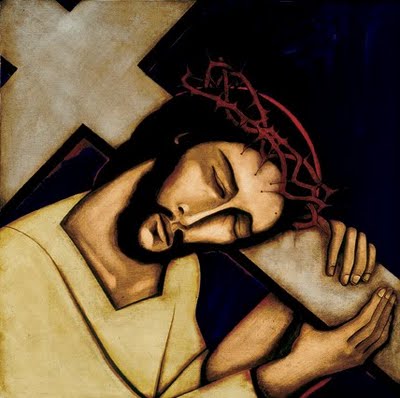
Jesus Carries the Cross by artist Michael D. O'Brien
Jesus came to be a different kind of messiah. He came not to bring suffering and destruction but to suffer and be destroyed, and then, by his suffering and death, to kill off the powers of death and evil and oppression. Death and evil and destruction would not have the last word. Instead, resurrection and life and love triumph. And they triumph because they are born, not of domination and oppression, but of self-sacrifice and humbleness. This is called the way of the cross- to choose to suffer instead of conquer, to conquer through love, to win through what everyone else considers losing.

As Christians, the way of the cross is one of the hardest things to understand and one of the most difficult practices to follow. With Peter, we might be tempted to ask God to take us down a different path. It is human to want to fight back when we are hit, to want to get back at those who hurt us and our loved ones. We want to win. But following Jesus means that we try to imitate him, to take on his ways as our ways.
So it may be that tests lurk around every corner, in every decision we make, as we pick between following the human instincts of retaliation, violence, and power and the ways of Jesus and the cross. Trusting in God’s enduring love and grace for all people, let us be ready to learn to take new and surprising paths with Jesus.


Friday, September 11, 2015

The Doctor will see you now

Pentecost 15, September 6, 2015
Mark 7:24-3724From there he set out and went away to the region of Tyre. He entered a house and did not want anyone to know he was there. Yet he could not escape notice, 25but a woman whose little daughter had an unclean spirit immediately heard about him, and she came and bowed down at his feet.26Now the woman was a Gentile, of Syrophoenician origin. She begged him to cast the demon out of her daughter. 27He said to her, “Let the children be fed first, for it is not fair to take the children’s food and throw it to the dogs.” 28But she answered him, “Sir, even the dogs under the table eat the children’s crumbs.” 29Then he said to her, “For saying that, you may go—the demon has left your daughter.” 30So she went home, found the child lying on the bed, and the demon gone.
31Then he returned from the region of Tyre, and went by way of Sidon towards the Sea of Galilee, in the region of the Decapolis. 32They brought to him a deaf man who had an impediment in his speech; and they begged him to lay his hand on him. 33He took him aside in private, away from the crowd, and put his fingers into his ears, and he spat and touched his tongue. 34Then looking up to heaven, he sighed and said to him, “Ephphatha,” that is, “Be opened.” 35And immediately his ears were opened, his tongue was released, and he spoke plainly. 36Then Jesus ordered them to tell no one; but the more he ordered them, the more zealously they proclaimed it. 37They were astounded beyond measure, saying, “He has done everything well; he even makes the deaf to hear and the mute to speak.”

Have you ever sat in the emergency room for hours? It’s an interesting experience. You see people on their worst days- they’re in pain, they’re sick, they’re there because they need help. If you’re there, observing, you’re usually there because you’re in need, too, or someone you care about is in pain or ill. It’s not easy to sit there, waiting for your name to be called, watching as the nurse calls in people who are in worse shape, because obviously, from your perspective, the thing you are suffering from is bad. But we usually understand on an intellectual level, even if we’re in great pain, is that the hospital will see the people who are sickest first. But   imagine- what if you went to the hospital, and instead of taking patients by the seriousness of their affliction, they took people according to their race or cultural heritage. I like to think that in this day and age, we’d all insist that the woman with the heart attack, the kid with the gunshot wound, that they would be seen first, regardless of skin color.

But that scenario is kind of what Jesus says to this Syrophoenician woman. She comes to Jesus, begging for help. She’s desperate. And Jesus tells her that she’s going to have to get in line- behind the Jewish people.


What’s going on? Why does Jesus treat her this way? And why, out of all the stories that Mark could tell, why does Mark include this less than flattering story about Jesus?
Well, first, there’s a big clue about the situation in the first sentence of this story. It’s in the geography. “From there, he set out and went to the region of Tyre.” The region of Tyre, which included Sidon in the north, was the northern-most territory included in the Promised Land, back when Joshua led the people into the land of Canaan. It was a place of promise, of rest after long journeys, of new life. But Tyre and Sidon weren’t small, dusty backwaters. They were ancient and well-known cities. Not only had they been around and well-populated for over 1,000 years, they were beach towns, resort towns. So when Mark tells us, “he set out and went to the region of Tyre,” and that he entered a house and didn’t want anyone to know that he was there, we could translate: Jesus headed to the beach, and he wanted to be anonymous.  In short, he was exhausted and needed a vacation.

 Of course, he had barely sat down since he started his public ministry at the synagogue back home in Nazareth and then healed Peter’s mother-in-law. From that time onward, people started mobbing Jesus, seeking healing. And everywhere he went, it was like Friday night in the ER waiting room.

So Jesus has just tried to get a few days off, and instead, like all the preceeding healing stories, word has gotten out, and a woman Jesus doesn’t even know comes looking for him. So here she comes, desperate, and here’s Jesus, desperately tired. They are two people at their worst.

It’s at that point that Jesus and the Syrophoenician woman have a conversation that changes everything. She begs him to heal his daughter, and he refuses, telling her to get in line, and basically calling her a dog. It’s not Jesus’ finest moment. Where is the Jesus who says things like, “Let the children come to me” and “Ask and you shall receive” and “your faith has made you well.”  Instead, he tells her that the children come before the dogs.

So she has a choice- she can accept what he says and slink away, or she can try again. This brave and desperate woman turns and creatively reframes what Jesus says.  “Alright, Jesus, but even the puppies under the table get enough by eating the crumbs.”
Perhaps her courage was born of desperation, but God uses her and her faith to heal and restore both of them. She expands Jesus’ vision to include the Gentiles, the outsiders, those that others consider beneath their notice. Then Jesus sees her, truly sees her, and finds the energy to heal her daughter.

But she is not the only one changed by their encounter, and we know this, too, because of geography. In the very next story, which we heard read in our gospel today, Jesus returned from Tyre to the region of the Decapolis near the Sea of Galilee by way of Sidon. To give you a little context, it would be like saying, Jesus returned from Cannon Beach to Bend by way of the Olympic Peninsula.  It was not exactly on the way. He heads east by going north. It makes no sense. 

But when they bring to him a deaf man in Sidon, who is almost certainly a Gentile, Jesus does not hesitate but heals him. And it is as if every scripture of the Old Testament has been fulfilled.

Mark may have included the story because it was part of his telling of what Jesus did, but this story would have become significant for Gentiles entering the church and even more important for Jewish people who followed Jesus first but thought of gentiles as dogs. This story remains a powerful story for us, the followers of Jesus. It is a powerful story for those of us who might feel like the children of God, but on our worst days we may feel unworthy of sitting at the table. It is especially powerful today as we hear stories of the descendants of the Syrophoenician people who are even now seeking a place for new life. This story reminds us that there is no hierarchy in Jesus’ waiting room, that Jesus the Doctor will see us all. Jesus heals us all, feeding us with abundant life and welcoming us all to the table of life.


Thursday, September 10, 2015

Dirty Hands

Pentecost 14 B, August 30, 2015
Mark 7:1-23Now when the Pharisees and some of the scribes who had come from Jerusalem gathered around him, 2they noticed that some of his disciples were eating with defiled hands, that is, without washing them.3(For the Pharisees, and all the Jews, do not eat unless they thoroughly wash their hands, thus observing the tradition of the elders; 4and they do not eat anything from the market unless they wash it; and there are also many other traditions that they observe, the washing of cups, pots, and bronze kettles.) 5So the Pharisees and the scribes asked him, “Why do your disciples not live according to the tradition of the elders, but eat with defiled hands?” 6He said to them, “Isaiah prophesied rightly about you hypocrites, as it is written,
‘This people honors me with their lips,
but their hearts are far from me;
7in vain do they worship me,
teaching human precepts as doctrines.’
8You abandon the commandment of God and hold to human tradition.”
14Then he called the crowd again and said to them, “Listen to me, all of you, and understand: 15there is nothing outside a person that by going in can defile, but the things that come out are what defile.”
21For it is from within, from the human heart, that evil intentions come: fornication, theft, murder, 22adultery, avarice, wickedness, deceit, licentiousness, envy, slander, pride, folly. 23All these evil things come from within, and they defile a person.”

The blessing still used by Jewish people today when they wash their hands and remember the commandment
Most of us wash our hands before eating, right? Or we at least agree that it’s a good idea. It seems like a pretty simple thing- don’t eat yucky germs. Even if we didn’t know about microbes and diseases, it still seems pretty basic. So why doesn’t Jesus teach his disciples to wash their hands before dinner?

Image result for stop sign
Doesn't matter what it says, we know what to do. Rules in action.
Before we answer that question, let’s talk about rules. What are the rules you live by? How did you come to follow them? Most likely, you learned some from your parents, some from your school, some from work, some from church, and some from just observing the world. We all live by many different rules that guide us throughout our days- from when we wash our hands or brush our teeth or what you do when you see a red, octagon next to the road.

As human beings, we create rules to prevent problems in the future. At their best, rules are meant to pass on the learned wisdom from previous experiences, to keep us from repeating past mistakes. But rules always carry the shadow side of legalism. If we follow rules simply to follow rules, that’s problematic.

In the Old Testament, we hear the words, “Give heed to the statues and ordinances that I am teaching you to observe, so that you may live to enter and occupy the land that the LORD, the God of your ancestors, is giving you.” The statutes and ordinances- the rules and laws- were made so that God’s people would have a rich life together, that the community would be strengthened.  They were meant as a gift to the people.

Moses Receiving the Tablets of the Law by Marc Chagall
Before we go much further, we should remember out loud that the gift of these statutes and ordinances was bigger than most of us realize. It wasn’t just the 10 Commandments, but the 613 laws outlined in the Old Testament, and they governed not just how you spent the Sabbath or treated your parents or neighbors but included guides on how God’s people loaned money, treated women who were menstruating, how to spin yarn, what to do about baldness, and a whole host of other things as well. God’s people were supposed to follow these rules together. By doing so, they would be instantly recognizable as a part of the group. You didn’t have to ask- hey is that person Jewish? You would just know- by how they were acting and what they looked like.

Although some of the rules seem odd to us today, there were reasons they existed, and the law was meant to unite the community with God, to teach them ways that cared for all the people and didn’t create systems of injustice. They were meant as a gift that gave life to God’s people and keep the community strong so they could live under God’s rule and not under the oppressive rule of foreign powers.

Copyright Dan Erlander, mannaandmercy.org
But somewhere along the way, things changed and things fell apart.

What the people hoped the Messiah would do.
By the time Jesus was born, there was a theory held by some that if they just got back to following all the rules, then they could restore the community and God would reward their religious purity by sending the Messiah to kick out the Romans. They got pretty serious about following the rules- all the rules- and making everyone else do so as well.

That brings us to Jesus and the gospel today, and also James and his comments about following rules.  James pretty much said that pure religion is caring for orphans and widows in their distress and staying unstained in the world. The first seems pretty straightforward, the second sounds rather impossible, by the way. Living in the world means that we are part of it- stains and all.

The good news is that Jesus comes into this confusing mess- where good and life-giving rules can be co-opted and twisted and misused to oppress people- and he comes along with freedom for us all.  Jesus doesn’t turn everyone into a rebel, but he does put the rules back into their proper place. He tells the Pharisees that God’s commandments are more important than human traditions. And then he tells them that evil intentions are what pollute- not breaking cleanliness rules.

Nobody's perfect
So back to that question about why Jesus doesn’t make the disciples wash their hands before dinner. I’m not sure exactly why Jesus took this stance, but I can imagine that by eating with unwashed hands, Jesus’ disciples showed that they weren’t perfect and they weren’t above anyone else and they certainly weren’t Pharisees. They showed that they were in need of God’s grace just as much as any other rule-breaker out there. Moreover Jesus still chose to hang out with them and love them and teach them.

So I say to you, that this Jesus I know from the gospel is the one who will love you no matter what. No matter what rules we have broken or will break, there is nothing that can keep God from loving you. Thanks be to God. Amen.